




Turning Roads into Power Plants.

Harvesting lost energy from traffic directly within existing infrastructure

REPS makes Energy Harvesting at scale possible. Engineered to convert lost vehicle movement into clean electricity across global road infrastructure, powering routines wherever vehicles decelerate.

01

/ 05

Impulse Capture

The Input

As a vehicle such as a heavy truck or passenger car enters a braking zone, it passes over a REPS street plate, which consists of 27 sequentially arranged trigger pairs. These modular plates capture the vehicle's forward momentum, using hydraulic cylinders to instantly convert the lost energy into vertical force.

Energy Harvesting

Every vehicle that brakes or decelerates carries kinetic energy that would otherwise be lost as heat. REPS captures that energy at the source turning unavoidable traffic flow into a continuous stream of usable electricity.

Built for All Vehicles

From 60-tonne freight trucks to light passenger cars, the Trigger Units are engineered to respond proportionally to axle load. Heavier vehicles naturally generate more energy, making high-traffic freight corridors the most powerful deployment sites.

Modular Design

Each Trigger Unit is a self-contained module that can be installed, replaced, or expanded independently. This means deployments can start small and scale lane by lane with no need to overhaul the full system to add capacity or service individual units.

System Dimensions

The REPS street plate measures 12 meters in length and 3 meters in width. Within these dimensions, 9 road slabs are arranged in sequence each containing 3 trigger pairs positioned left and right to align with vehicle tire tracks across the axle. The system is embedded into a 15 cm civil foundation of steel or concrete, ensuring structural stability under the continuous load of heavy freight traffic.

02

/ 05

Hydraulic Transmission

The Transfer

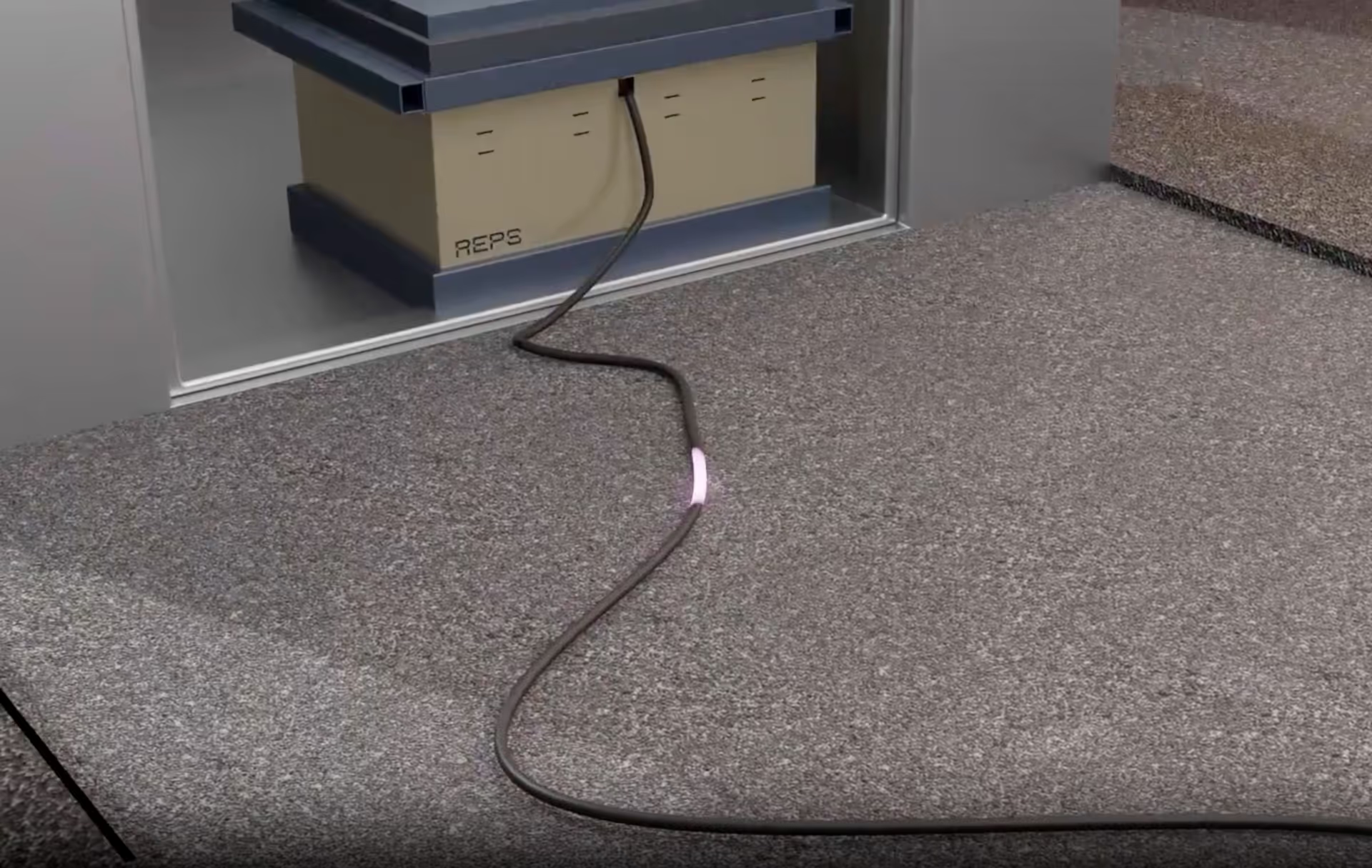
The vertical force captured is instantly converted into hydraulic impulses and channeled into the central Energy Converter Module through hydraulic lines. This keeps all sensitive components safely off the road, while still handling the massive weight of heavy freight.

Efficient Force Transfer

Hydraulic lines transmit force with minimal energy loss over distance, making them ideal for separating the road-level capture point from the converter module. The system maintains high transmission efficiency even under the variable loading patterns of mixed traffic.

Maintenance and Safety

Sensitive components are positioned safely outside the roadway, reducing exposure to vibration, weather, and mechanical stress. This separation simplifies routine maintenance and significantly extends the operational lifespan of the core system.

Closed-Loop Reliability

The hydraulic circuit operates as a sealed, closed-loop system, meaning no fluid is lost or replenished during normal operation. This makes it self-sustaining, resistant to contamination, and reliable across a wide range of operating temperatures and conditions.

Infrastructure Grade Engineering

Every component is rated for continuous industrial use under heavy load cycles. The system is designed to meet the demands of high-throughput logistics environments like ports, terminals, and freight corridors, where uptime is non-negotiable.

03

/ 05

Frictionless Conversion

The Heart

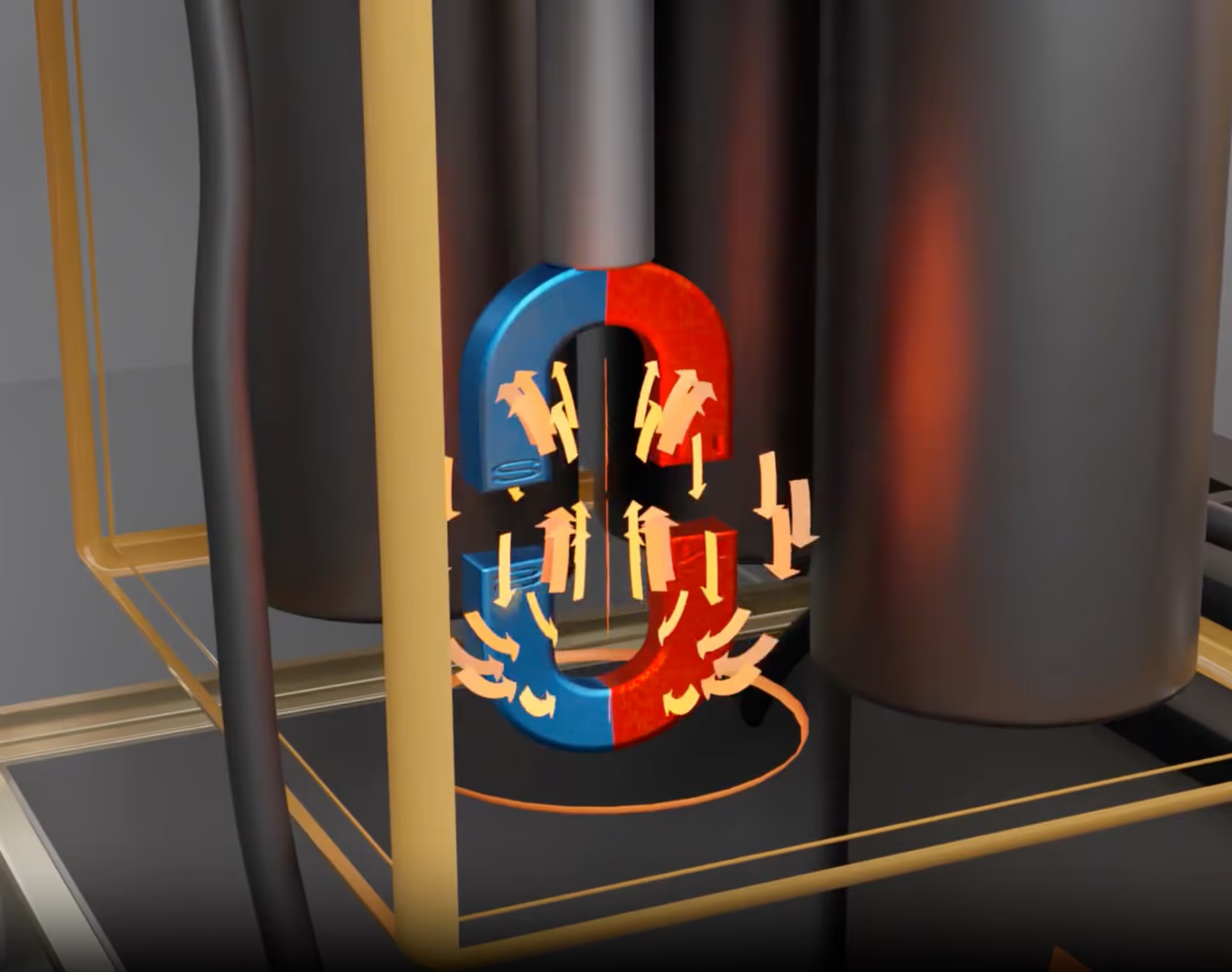
Inside the converter module, the hydraulic impulses drive a generator with one major advantage: zero friction. Utilizing patented Permanent Magnetic Bearings, the generator's shaft is suspended entirely by magnets rather than mechanical contact. This maximizes efficiency and ensures the system can withstand millions of load cycles with virtually no wear and tear.

Near-Zero Friction

Traditional generators rely on mechanical bearings that create friction, heat, and wear under continuous load. REPS uses Permanent Magnetic Bearings to levitate the shaft entirely - eliminating contact, energy loss, and the primary cause of mechanical failure.

Extended System Lifespan

With no metal-on-metal contact in the generator core, the system experiences almost no wear over time. This drastically extends the operational lifespan of the converter module, reducing replacement cycles and total cost of ownership over the infrastructure's lifetime.

Higher Energy Yield

By removing frictional losses from the conversion process, more of the captured hydraulic energy makes it through to electricity output. Even marginal efficiency gains compound significantly across millions of vehicle passes per year. This makes REPS 250 times more efficient than exisiting energy converters.

Low Maintenance Requirements

Fewer moving parts in contact means fewer components that need servicing. Routine maintenance is limited to hydraulic fluid checks and surface-level inspections, keeping operational costs low and system downtime to a minimum.

04

/ 05

Energy Storage

The Storage

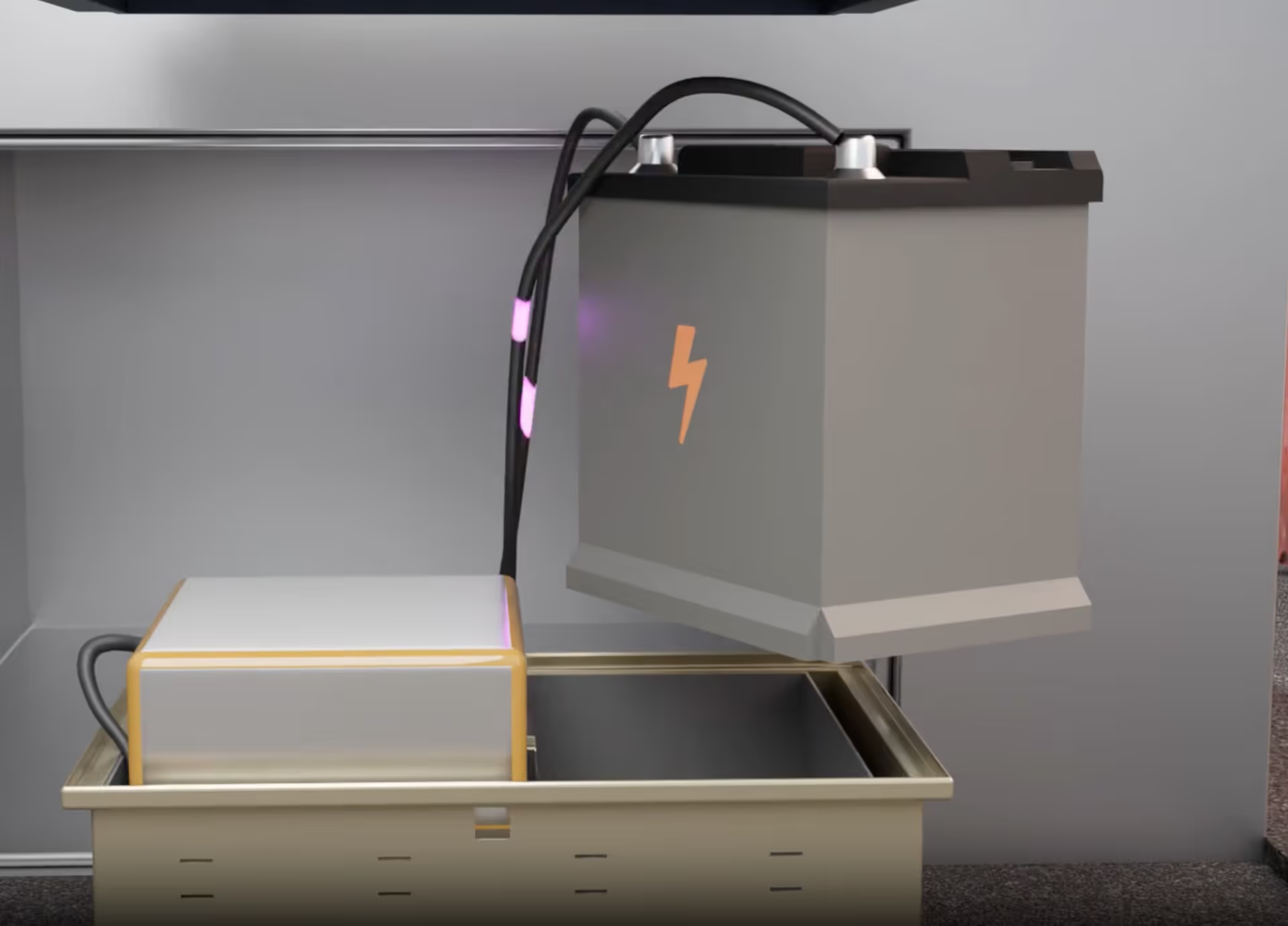
Once generated, the electricity is routed to on-site storage modules, such as localized battery banks. This buffering layer absorbs the natural peaks and valleys of daily traffic flow, ensuring the system can output a smooth, consistent, and stable supply of clean energy.

Buffered Energy Flow

Traffic is never constant: peak hours, shift changes, and idle periods create natural surges and lulls in energy generation. On-site battery storage absorbs these fluctuations, decoupling generation from consumption and ensuring a smooth, uninterrupted power supply at all times.

Scalable Storage Capacity

Storage modules are sized to match the specific energy profile of each deployment site. From a single-lane access road to a multi-lane freight terminal, the system scales to buffer exactly as much energy as the site requires.

Grid-Ready Output

The stored energy is conditioned and stabilized before distribution, meeting the power quality standards required for direct grid feed-in or local infrastructure use. No additional conversion hardware is needed.

05

/ 05

On-Demand Usage

The Output

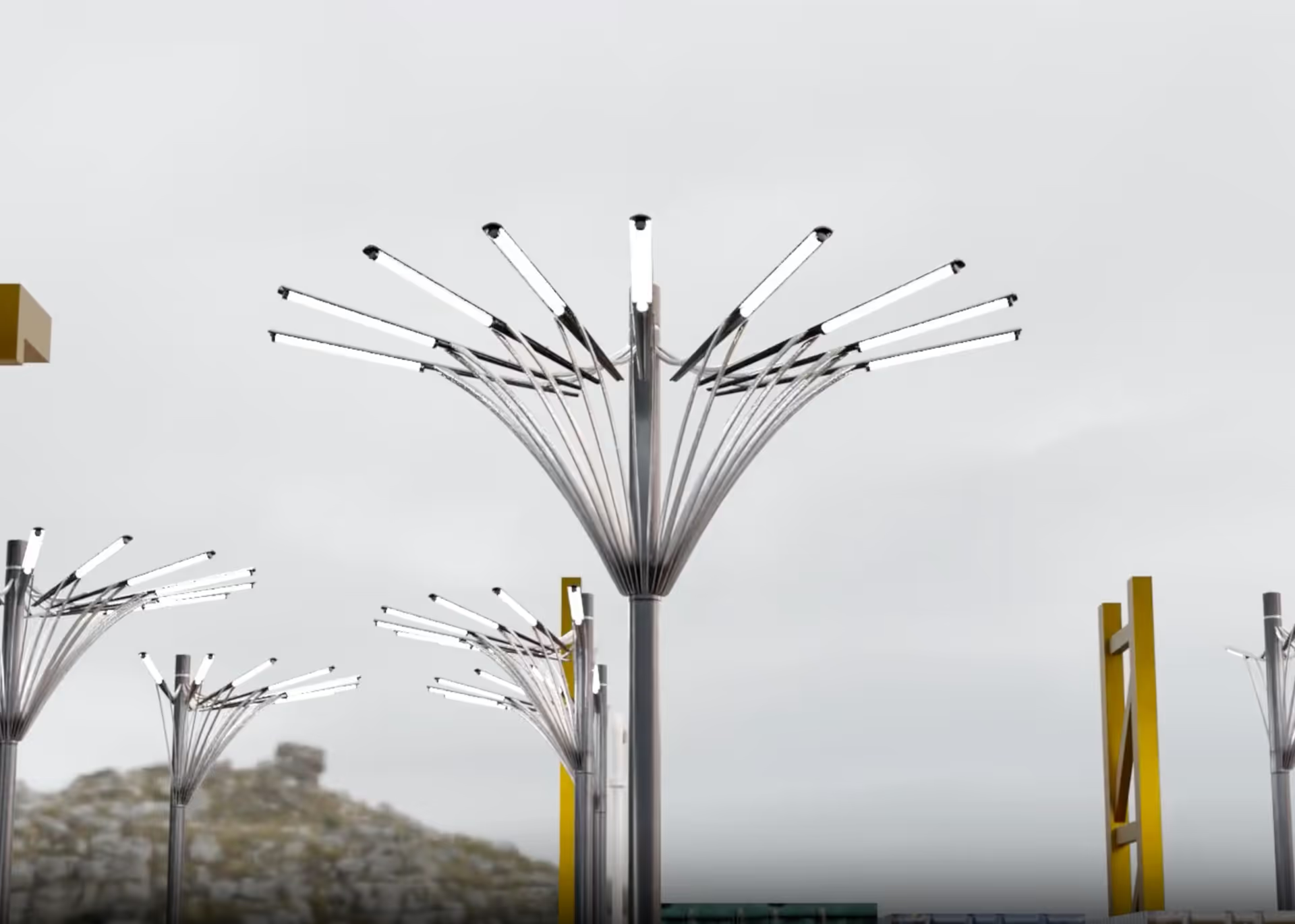
Finally, this stored energy is distributed exactly where it is needed most. Whether powering EV charging stations, powering facilities, supplying on-site operations, or feeding directly back into the local grid, REPS seamlessly integrates with existing infrastructure to deliver reliable electricity on demand.

Flexible Deployment

REPS output can be directed to wherever energy is needed most: EV charging stations, lighting systems, on-site machinery, or facility operations. Each installation is configured to match the specific energy demands and infrastructure of the site.

Grid Integration

The system is designed to feed directly into the local grid when on-site demand is low, turning excess harvested energy into a revenue stream or offsetting grid consumption costs for port operators and logistics facilities.

Operational Efficiency and Independence

By generating electricity from existing traffic flow, REPS reduces a site's dependence on external power supply. Lowering energy costs, cutting emissions, and contributing to sustainability targets without disrupting daily operations.

Scalable Application

From a single entry lane to a full terminal network, REPS is modular by design. Additional Trigger Units and storage capacity can be added incrementally as energy needs grow. Making it a long-term infrastructure investment that scales with the site

Locations

From International Port Terminals to Urban Infrastructure

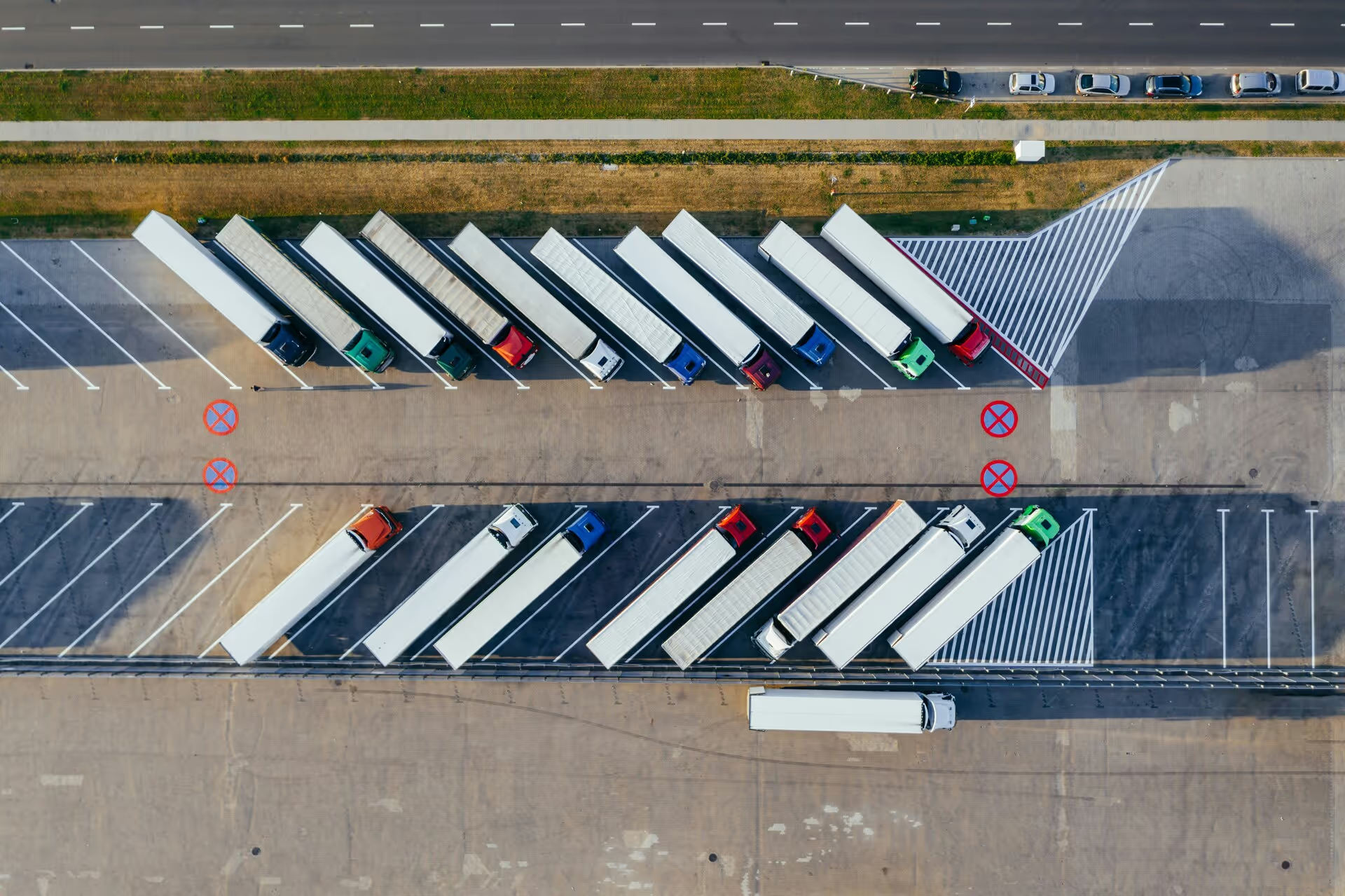
Hafen von Oben
Ports / Terminals

High frequency of heavy truck traffic and defined traffic flows make ports and terminals ideal locations for generating clean electricity with REPS.

Best locations

Terminal gates, entry and exit lanes, ramps, weigh stations, and internal port roads with recurring stop-and-go traffic

Traffic profile

High frequency of heavy trucks, repeated braking zones, and predictable daily traffic patterns

Electricity Usage

On-site operations such as lighting, terminal infrastructure, charging systems, battery storage, or grid feed-in.

Highways

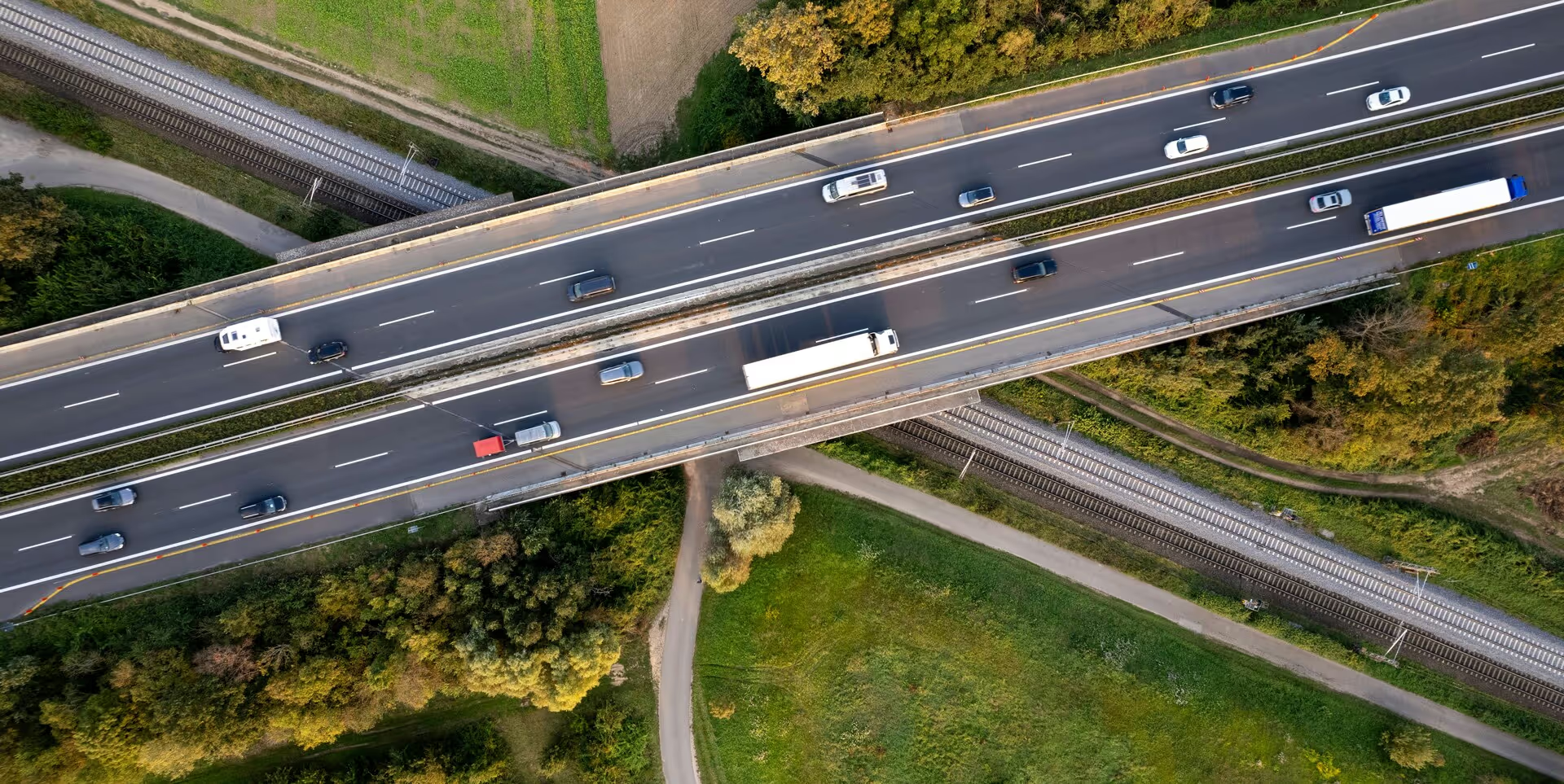
High daily traffic volumes and recurring deceleration points make highways ideal for clean electricity generation with REPS.

Best locations

Toll stations, exit ramps, service areas, weigh stations, and highway interchanges

Traffic profile

Continuous vehicle flow with recurring deceleration, high daily traffic volumes, and mixed vehicle types.

Electricity Usage

Roadside infrastructure such as lighting, traffic systems, service stations, EV charging, or grid supply.

Logistics Hubs

Concentrated truck traffic and recurring stop-and-go patterns make logistics hubs ideal locations for clean electricity generation with REPS.

Best locations

Entrance lanes and gates, internal logistics roads, loading zones, and truck staging areas.

Traffic profile

Frequent truck movements, repeated stop-and-go patterns, and concentrated traffic during operating hours.

Electricity Usage

Warehouse operations, charging infrastructure, facility energy demand, battery storage, or local grid supply.

REPS is designed for areas with high-frequency traffic and where vehicles need to slow down anyway.

Our System in Numbers

REPS in Action

REPS is designed for areas with high-frequency traffic and where vehicles need to slow down anyway.

By converting lost energy into clean electricity directly within the roadway, the system transforms traffic from a passive flow into an active energy source. Whether in ports, logistics hubs, airports, major roads, or urban networks, REPS integrates seamlessly into existing infrastructure and scales with vehicle volume. The result is predictable, locally generated power that strengthens energy resilience, supports electrification, and unlocks new value from infrastructure already in use.

REPS logo

At a glance

Energy generation

Up to 60 kWh per day

from ~1,000 heavy trucks at our first live installation in the Port of Hamburg

System efficiency

90%+ energy conversion efficiency

More than 254× more efficient than dynamo-based systems and 13,000× more efficient than piezo technologies

No additional land use

0 m² additional land required

REPS systems are integrated directly into existing road infrastructure.

Built for heavy infrastructure

Designed for high-load environments

Engineered for >20 years durability under continuous heavy vehicle traffic.

Untapped energy source

Every braking event contains energy

REPS captures energy from unavoidable vehicle deceleration events.

Massive global potential

Thousands of potential deployment sites

Ports, logistics hubs, highways and urban infrastructure worldwide.

Product

Engineered for Predictable Performance

The Site of Our First Installed REPS System

Impact

HCS – Hamburger Container Service:
a long-established logistics service provider operating at the heart of the Port of Hamburg.

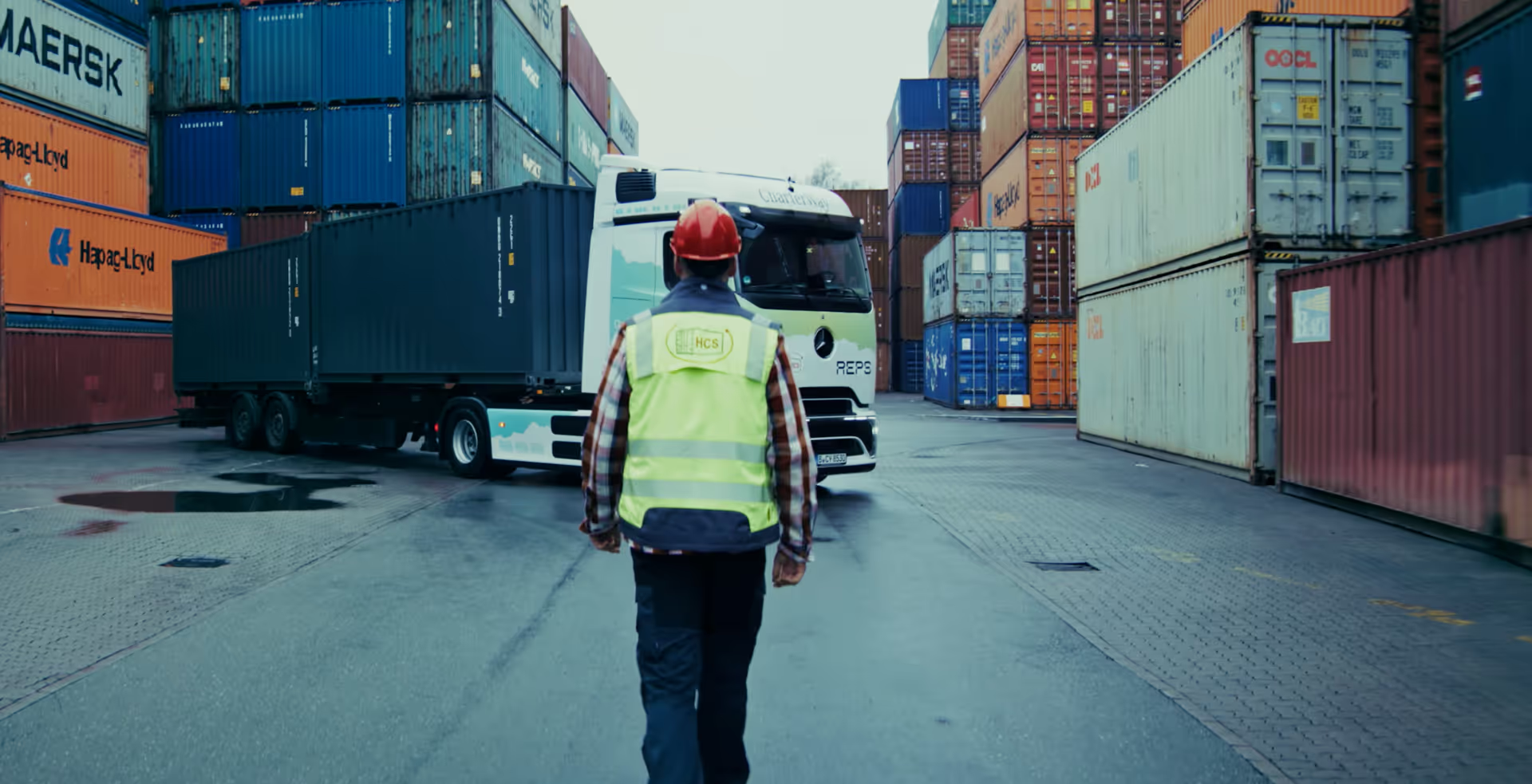
The world’s first Road Power Plant was installed at Hamburg Container Service GmbH (HCS) in the Port of Hamburg. As a family-run company specializing in container repair and maintenance, HCS plays a key role in port logistics. Its 125,000 m² site in Hamburg-Wilhelmsburg experiences around 1,000 truck movements per day, with regular heavy traffic and clearly defined traffic flows, making it an ideal environment for the deployment of REPS systems. With the goal of becoming climate-neutral by 2040, HCS and the Hamburg Port Authority (HPA) are representative of ports worldwide that are committed to sustainable port infrastructure.

Norddeutschland Karte
Hamburger Hafen
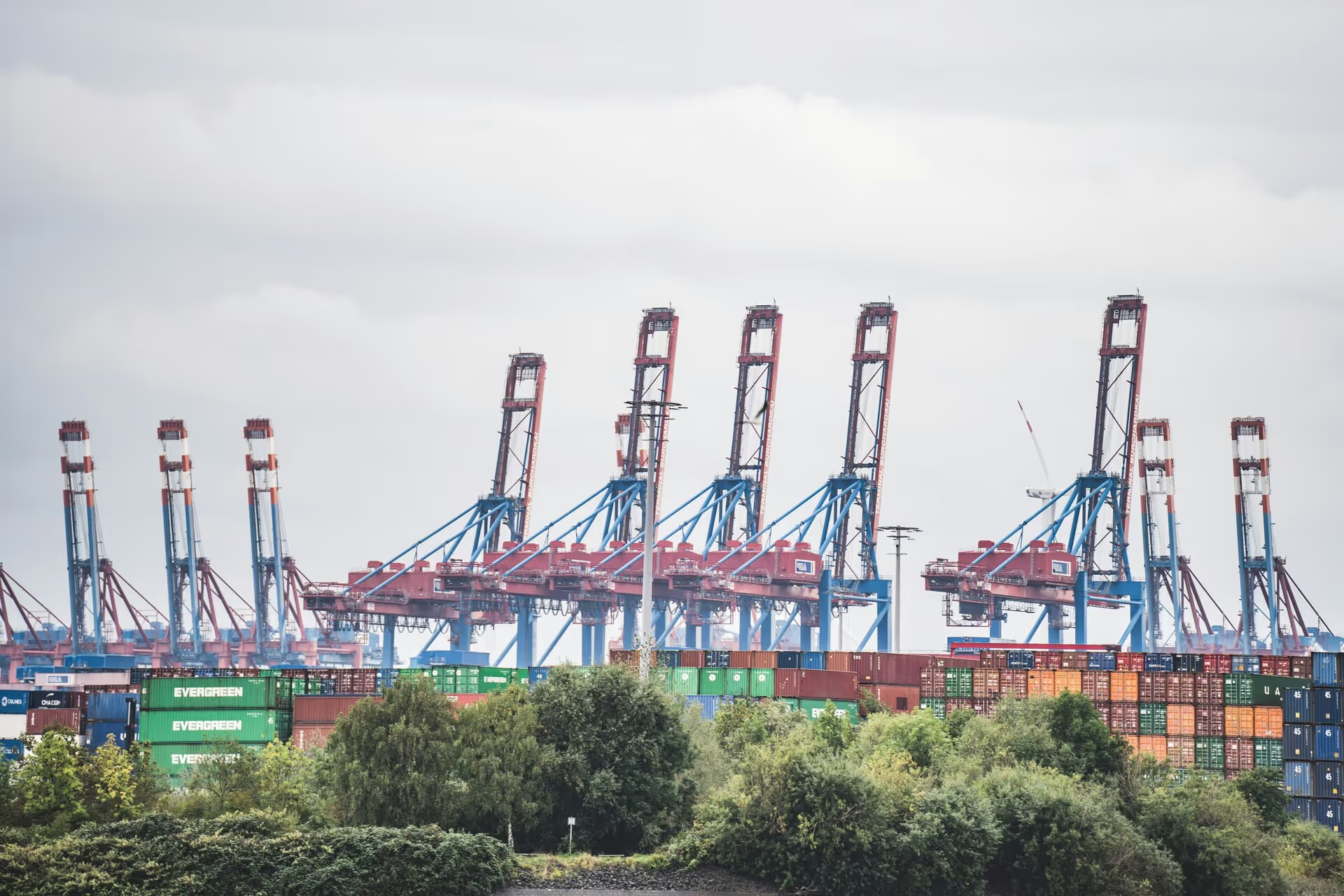
Port of Hamburg

Europe's third-largest seaport and a global logistics powerhouse, the Port of Hamburg managed by the Hamburg Port Authority (HPA) served as the stage for REPS' world premiere, making it a true lighthouse project for sustainable port infrastructure worldwide.

57 kWh per day

57 kWh of clean electricity can be produced daily under real port traffic conditions with around 1,000 trucks per day.

~10 % CO₂ reduction

CO₂ emissions from port traffic could be reduced by about 10 percent, turning transport infrastructure into an active contributor to decarbonization.

10 GWh a year

A full roll out of 312 systems could generate around 18 GWh per year, potentially offsetting 5 to 15 percent of traffic-related emissions.

ROI < 4 years

With an installation of 312 systems generating 10 GWh of clean electricity per year, REPS delivers a full return on investment in under 4 years

Green energy

Transforming Roads into Decentralized Energy Assets.

Kreuzung aus der Vogelperspektive

Meet the Team

We aim to redefine how energy is recovered and produced, so everyday infrastructure becomes part of a cleaner, more sustainable future.
About us
Alfons Huber
Founder & CEO
Laura Wiedmann
COO
Sai Kumar Konduru
Head of Mechanical Engineering
Vincent Moser
Business Development & Growth
Harsh Gogri
Head of Electrical Engineering
Maximilian Abbate
Head of Strategy
Niklas Anestis Trichas
Civil & Construction Engineer
Julia Stern
Business Analyst
Robert Lechner
Technician
Gonzalo Franco Sosa
Chartered Civil & Development Engineer

Built by Engineers.
Driven by Execution.

Meet the Team

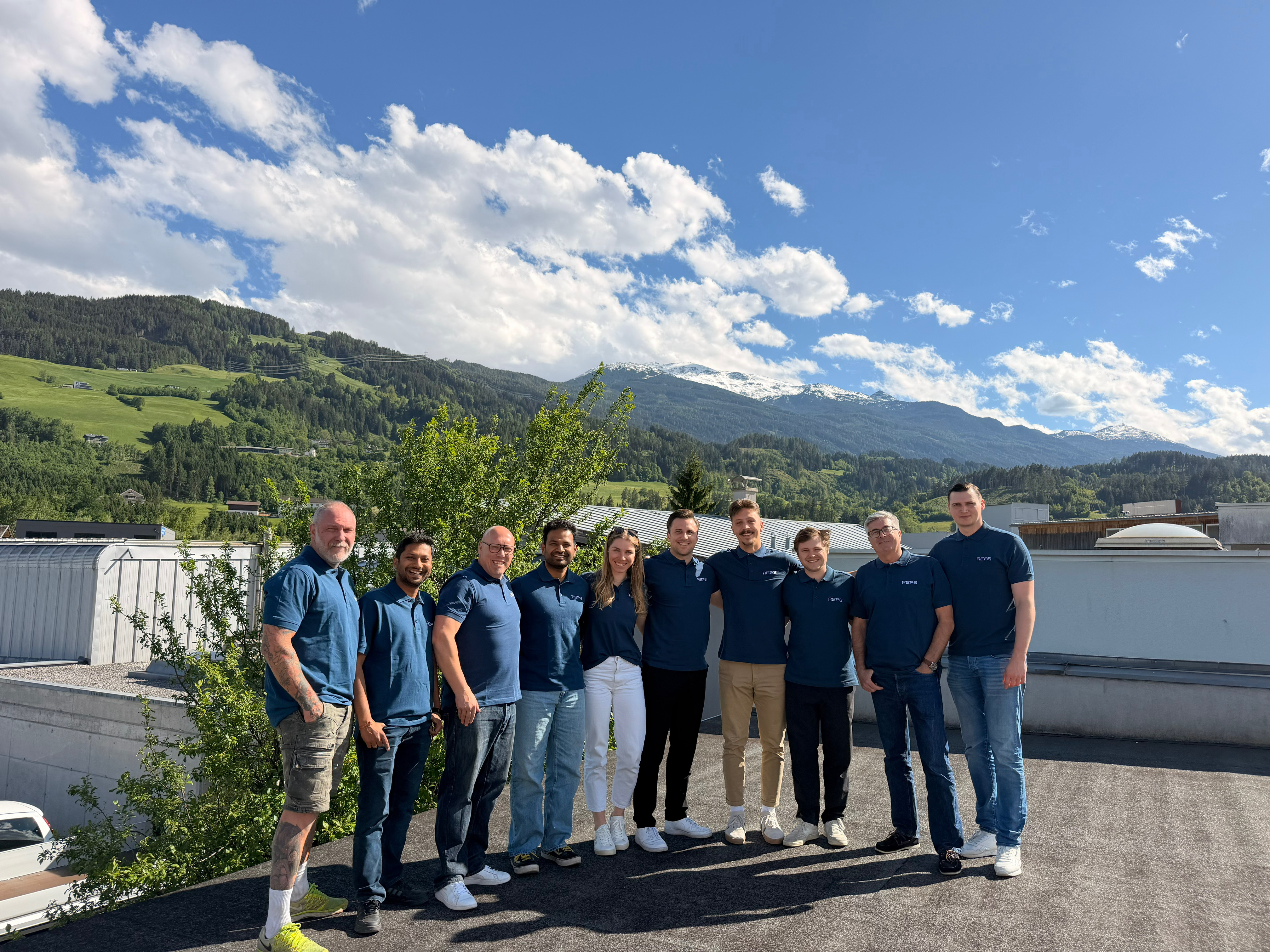
REPS unites experts across infrastructure, energy harvesting, mechanical engineering, large-scale deployment, and economics

United by a shared ambition to redefine how roads contribute to the energy transition, the team combines deep technical knowledge with a strong focus on real-world performance. Rather than developing concepts for the future, REPS engineers solutions that contribute to infrastructure challenges of today and tomorrow, while simultaneously playing a major role in the global energy transition. Every discipline, from product development to field implementation, is aligned around one goal: delivering technology that operates reliably under the toughest conditions.

Core Beliefs

What We Believe

01

Innovation through action

Everything is possible - unless it breaks the laws of physics. We don’t fear problems - we solve them.

02

Ownership with purpose

It’s your company - take responsibility and build with intent. We take initiative, follow through, and care deeply.

03

Human, honest, driven

How you shout into the forest is how it echoes back. We lead with honesty, kindness and intent. Trust lays our foundation - energy builds our momentum.

04

Team first, always

It’s never just one person. We help each other , support without hesitation and celebrate every win. Big or small.

REPS Teamfoto

Interesting articles about us, the industry and upcoming events

News & Events
Dec 2, 2025
1 min

A milestone for REPS: our first road power plant in action

November 24th was a special day for our whole team. After weeks of preparation and growing excitement, it felt great to finally stand together at the Port of Hamburg and show our technology to the public for the first time.

Nov 5, 2025
1 min

Company update: The World Premiere of the First Road Power Plant

On November 24th, we will celebrate a historic milestone at the Port of Hamburg: The World Premiere of the first Road Power Plant.

Frequently Asked Questions

FAQ
How durable is the system and what about environmental impacts on it?

The system has a product lifetime of 20-25 years and must meet or exceed the structural quality of the surrounding road to comply with regulatory standards. As a result, typical environmental conditions such as heat, freezing temperatures and salt do not negatively affect the system.

How do I know if REPS is viable on my roads?

We offer a free-of-charge potential analysis tailored to your infrastructure to assess viability and expected energy output. Please request a potential analysis through the contact form.

What maintenance is required?

We recommend an annual inspection to ensure the system is operating as intended.

What makes REPS stand apart from conventional energy harvesting technologies?

REPS is significantly more durable and efficient than existing energy harvesting technologies, achieving more than 250 times the efficiency while offering a product lifetime of 20-25 years. Unlike many renewable solutions, the system does not depend on weather conditions or daylight and can be seamlessly integrated into existing road infrastructure without requiring additional sealed surfaces.

Where can REPS be deployed?

REPS can be installed on paved road sections where vehicles naturally slow down or brake, such as in front of traffic lights, stop signs, toll stations, downward slopes or highway exits.

How can I evaluate the potential for my site?

We offer a free-of-charge potential analysis tailored to your infrastructure to assess viability and expected energy output.

Can the system be scaled?

Yes, the system can be scaled extensively, with hundreds or even thousands of units installed within a single area where conditions are suitable. Modules can also be connected, for example linking two 12 m systems to create a 24 m installation, which increases the duration a vehicle drives over the system and consequently also the amount of energy generated.

What measurements does the system have?

The system measures 12 × 3 meters.